
The Flooded Church of Rzhyshchiv: A Guide to the "Ukrainian Atlantis" Risen from the Waters ⛪🌊
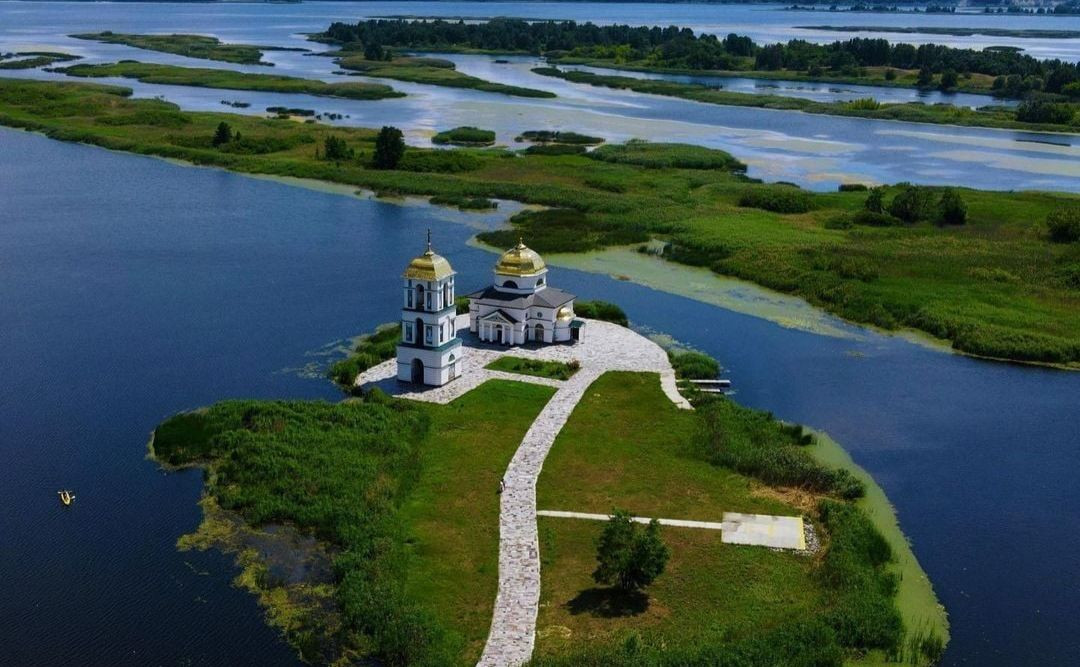
Ukraine is a land of hidden treasures, where every stone has a century-old story to tell. But among them, there is a special place that evokes both awe and a quiet sense of melancholy. This is the Transfiguration Church, better known as the Flooded Church of Rzhyshchiv. Perched on a tiny island in the middle of the vast Kaniv Reservoir, this sanctuary has become a symbol of the indestructibility of the spiritual over the material. In this article, we will delve into its history, legends, and practical tips for travelers seeking to touch this living legend. 🗺️🎒
The Tragedy of Husyntsi: How an Entire Way of Life Vanished 🏚️💧
The story of the Flooded Church is inextricably linked to the fate of the village of Husyntsi. Once, it was a large, prosperous settlement on the left bank of the Dnieper. It was a place of fishermen, farmers, and craftsmen. Life revolved around the river, which served as both a provider and the main transport artery. The central jewel of the village was a majestic stone church, built in 1822 by the local landowner, Pan Husynskyi. It was built "for the ages"—using a special mortar mixed with chicken eggs, which made the bricks as strong as granite.
Everything changed in the 1970s when Soviet engineering decided to tame the Dnieper. The construction of the Kaniv Hydroelectric Power Plant required the creation of a massive reservoir. This decision was a death sentence for dozens of riverside villages, including Husyntsi. Residents were given mere weeks to pack their lives. Families who had lived on this land for centuries were forced to abandon their homes, orchards, and ancestral graves. Houses were leveled by bulldozers so they wouldn't interfere with navigation, trees were felled, and the area was prepared for flooding. 🪓🌳
As the water began to fill the lowlands, something incredible happened. The church stood on the highest hill of the village, known as "Lysa Hora" (Bald Mountain). The water swallowed the houses, the school, and the mill, but it stopped exactly at the threshold of the church. It turned the hill into an island, leaving the sanctuary standing lonely amidst the boundless waters. Thus, Husyntsi vanished from the maps but remained in memory as the "Ukrainian Atlantis." 🌊
An Architectural Phenomenon: Resilience Through the Centuries 🏛️✨
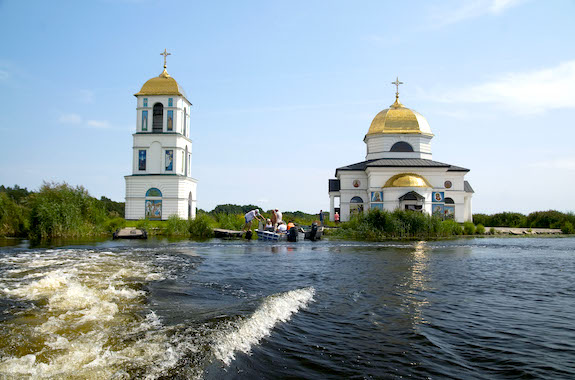
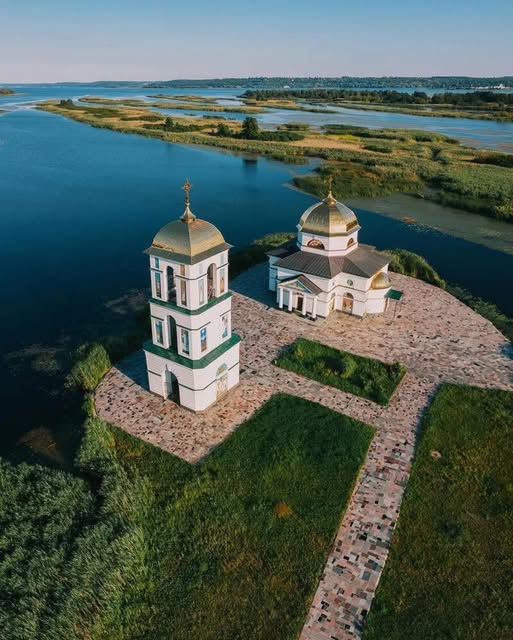
The Transfiguration Church is a unique example of Ukrainian Baroque with distinct Classical features. Its architecture is striking in its harmony. Cross-shaped in its floor plan, with tall windows and a slender bell tower, it appears light, almost ethereal, despite its massive construction.
For nearly 40 years—from the time of the flooding until the early 2010s—the church stood abandoned. It survived freezing winters, Dnieper storms, ice drifts, and human vandalism. In the 1990s, tourists reaching the site by boat saw a tragic sight: the roof had collapsed, birch trees were growing inside, and the walls were covered in graffiti rather than frescoes. However, the foundation—that same one "made with eggs"—held the building in a death grip. 🌱🧱
The reconstruction, which began in 2011, was a true miracle. Funds were raised by patrons and concerned citizens. The island had to be raised and reinforced with concrete to prevent erosion. A bridge was built to connect the church to the shore (though it is often submerged during spring floods). Today, the church is fully restored: its golden domes shine in the sun, and prayer is heard within its walls once again. It is a rare case where a monument doomed to destruction was given a second life. 🕊️🔔
A Weekend Itinerary: The Complete Journey 🛶📸
A trip to Rzhyshchiv is not just a visit to a single point; it is an opportunity to see a whole constellation of sights in the Kyiv region. To make the most of your day, we recommend the following plan:
Stage 1: Rzhyshchiv Embankment and Ivan-Hora Begin your journey in the town of Rzhyshchiv itself. This cozy town has a rich history. Be sure to climb Ivan-Hora. It is a high cliff over the Dnieper where an ancient Rus fortress once stood. The view from here is so breathtaking that you will understand why our ancestors chose these lands. You will see the curve of the river and a distant white speck on the water—your main destination. 🌅
Stage 2: The Boat Trip While you can now drive toward the church from the left bank via a dirt road, the true experience is only found on the water. At the Rzhyshchiv pier, captains with boats are always waiting. 🚤
-
Tip: Arrange a trip not just to the church, but also through the picturesque marshes (plavni). These are protected areas where you can see herons, swans, and unique river flora. 🦢
-
The Sensation: As you approach the island, the church seems to grow out of the water. It is a mesmerizing sight. Ask the captain to cut the engine for a minute to hear only the splashing of the waves and the cries of the birds.
Stage 3: Exploring the Island Stepping onto the island, you will feel a shift in energy. There is a silence here that is impossible to find in the city. Walk around the exterior of the church and step inside. Although the interior is new, the spirit of the place remains. Next to the church stands the bell tower, which (if you are lucky and it is open) you can climb. The view of the Dnieper from the height of the bell tower is something that will stay in your memory forever. 🧘♂️🕯️
Practical Guide: How to Plan the Perfect Trip 📝🚙
To ensure that small inconveniences don't spoil your journey, prepare in advance.
How to Get There (Detailed)
-
By Car: The best route is the Obukhiv highway (H-01). It is in good condition and exceptionally beautiful in autumn and spring. The distance from Kyiv is about 80 km. Keep in mind that within Rzhyshchiv, the roads can be bumpy, so drive carefully.
-
By Public Transport: Minibuses (marshrutkas) depart from the "Vydubychi" bus station in Kyiv every 30-40 minutes. The journey takes about 1.5 hours. From the Rzhyshchiv bus station to the shore, it is a 15-20 minute walk or a 5-minute taxi ride.
Where to Eat and Rest? 🍴🏡
Rzhyshchiv is gradually developing as a tourist center, but the service is still very "home-style."
-
Picnic: This is your best option. Bring a blanket, a thermos of tea, sandwiches, and fruit. There are gazebos on the Dnieper shore, but it is best to find a cozy spot on Ivan-Hora itself or on the island (just remember to leave no trace!). 🥪🍎
-
Local Cuisine: There are several cafes in town. Try the local fish soup (yushka)—they say Rzhyshchiv fishermen have a secret ingredient that makes it incredibly tasty.
-
What to Pack? (The Full Checklist) 🎒
-
Comfortable Shoes: The island is sandy, and the hill climbs are steep. Forget about heels.
-
Sun and Bug Protection: The sun reflects off the water and "grabs" you very quickly, and there may be mosquitoes in the marshes. ☀️🦟
-
Power Bank and Phone Storage: You will want to photograph everything—from the golden domes to every wildflower on the shore. 🔋
-
Church Attire: If you plan to go inside, women should have a headscarf and covered shoulders.
Mysticism, Legends, and the Power of the Place 👻📜
Local residents call Husyntsi "the place where time stood still." There is a legend that during the flooding, one old man refused to leave and stayed in his house until the very end. They say his ghost is still occasionally seen by fishermen on foggy mornings—he supposedly walks on the water around the church, guarding it.
Another story involves the bells. When the church was abandoned and had no bells, people still claimed to hear them ringing before great disasters or storms. Scientists explain this through the acoustics of the water and wind, but locals are certain: it is the voice of the land itself, mourning its lost village. 🔔🌊
Many psychics and bio-energy practitioners come here for meditation. They claim the island sits at the intersection of powerful energy lines. Whether this is true is unknown, but the fact that you feel a surge of strength and inner peace after the trip is something confirmed by thousands of tourists.
Nearby Locations: Expanding Your Horizons 📍🗺️
If you have time left, don't rush back to Kyiv. There are several other fantastic spots around Rzhyshchiv:
-
Vytachiv: Located on the way. This spot offers some of the most beautiful views in Ukraine. A high bank, an old wooden windmill-chapel, and the boundless Dnieper. Many Ukrainian films were shot here. 🏚️🌄
-
Trypillia: The village where Vikentiy Khvoyka discovered the famous Trypillian culture. There are two museums where you can learn how our ancestors lived 7,000 years ago. 🏺🎭
-
Stayky: A village with clay quarries and incredible cliffs. A great place for those who love wild nature and few people.
Why is it Important to See This? ⏳🌤️
The Flooded Church is not just a tourist object. It is a monument to human resilience. It reminds us that even when the whole world around us changes and circumstances try to "submerge" us, the most important thing is to have a solid foundation.
Today, as we feel the value of our history and culture especially acutely, a visit to such a place becomes a sort of pilgrimage. It is an opportunity to bow to the past and see how it is reborn in the present.
The church in Husyntsi is the perfect place for:
-
Photographers looking for unique shots. 📸
-
Historians wishing to feel the breath of the past. 📜
-
Anyone who wants to know their land better. 🇺🇦
Respect this place, leave it as clean as you found it, and it will surely gift you a piece of its magic. 🌿🚮
Are you ready to embark on this journey through time and water? The Flooded Church is waiting to tell its story specifically to you. 🇺🇦💙💛-
You can purchase medical insurance for entry into Ukraine on the website: welcomeukraine.today
Travel responsibly and explore new facets of Ukraine!
Going to Ukraine?
Medical insurance the border accepts — bought online, in your inbox in minutes.
Read next
All articles
Rosh Hashanah in Uman 2026: Dates, How to Get There and Travel Cost
Rosh Hashanah in Uman in 2026 will once again be one of the largest pilgrimage events of the year. Tens of thousands of pilgrims…
The Ukrainian Carpathians: What to See, How to Get There and How Much a Trip Costs
The Ukrainian Carpathians are a popular destination for foreign travelers who want to see mountains, forests, waterfalls, traditional…
Holidays in Prymorske and Vylkove (Odesa Region) in 2026: Peace, Nature and the Real Ukraine 🌊
Southern Odesa Region today is one of the few seaside destinations in Ukraine where you can still enjoy a peaceful, unhurried holiday. The…