
The Magnitude of the Potocki Legacy: A Comprehensive Guide to Lviv’s Premier Aristocratic Residence
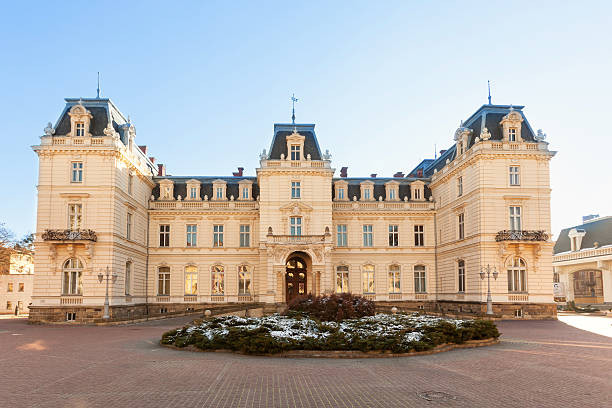
Lviv is a city where history breathes through every stone, but among its hundreds of ancient buildings, one stands out with a particular imperial stature. This is the Potocki Palace. Located at 15 Kopernyka Street, it is not merely an architectural monument but a symbol of an entire era when Lviv served as the capital of the Kingdom of Galicia and Lodomeria. In this article, we will take a deep dive into the history of this site, examine its architectural nuances, and peer into the halls where the fates of Europe were once discussed.
Chapter One: The Visionaries and the Ambitions of Count Alfred II
The story of this magnificent building is inextricably linked to the history of one of the most powerful dynasties in Europe. The Potockis were not just wealthy landowners; they were often referred to as the "uncrowned kings" of these lands. The palace’s patron, Count Alfred II Józef Potocki, was a man of global influence. A Knight of the Order of the Golden Fleece, a governor of Galicia, and a Minister of Agriculture for Austria, his status demanded a setting of immense grandeur. The family’s old manor on this site, built in the Classicist style, seemed far too modest and cramped by the late 19th century. He desired a residence for grand receptions, balls, and official visits where he could worthily host even Emperor Franz Joseph himself.
In 1880, the Count invited the renowned French architect Louis d'Auvergne to lead the project. This choice was deliberate, as Alfred II was a passionate admirer of French culture. The design was executed in the style of French Neoclassicism, reminiscent of the era of Louis XIV. This was a bold move, as Austrian and German architectural thoughts dominated Lviv at the time. The palace was intended to be a "piece of Paris" in the heart of Galicia. Construction was a long and meticulous process. Unfortunately, Alfred II did not live to see its triumphant completion. The work was finished by his son, Roman Potocki, who invited the finest European craftsmen to decorate the interiors. It is thanks to the efforts of Roman and his wife, Elżbieta Radziwiłł, that the palace acquired the luxury that continues to amaze us today.

Chapter Two: An Architectural Symphony of the Facade
The Potocki Palace is a triumph of symmetry and elegance. The primary concept of the building is an "H-shaped" plan, typical of the French hôtels particuliers (grand townhouses) of the 17th and 18th centuries. The first thing a tourist encounters is the massive, ornate wrought-iron gates. Passing through them, you enter the "cour d'honneur," or the court of honor. This space was specifically designed so that the guests' carriages could pull in grandly, make a full circle, and stop right in front of the ceremonial staircase. Everything here works to create a powerful first impression: the massive plinth, the rusticated walls of the ground floor, and the graceful columns of the upper levels.
Above the main entrance sits the Potocki coat of arms—the "Pilawa." Its three horizontal bars symbolize an ancient legend of the family’s courage in battle. The facade is adorned with Ionic and Corinthian orders, balustrades, and the windows of the second floor feature ornate pediments with delicate stucco work. Special attention should be paid to the roof. The high mansard roof, covered in gray slate scales, is the palace's signature feature. It gives the building that characteristic French verticality and lightness, distinguishing it from the heavier, more grounded style of German Baroque.
Chapter Three: The Interiors — A Journey into the Belle Époque
The interiors of the first floor were designed exclusively for representative functions. There is no room for modesty here; every inch of the space speaks of the owners' immense wealth. The visitor first enters the Mirror Hall, also known as the Ballroom. This is the palace's most famous room. Its concept is built on the play of light: massive mirrors in gilded frames are placed opposite each other, creating an illusion of an infinite suite of halls. On a sunny day, the light reflecting off the crystal chandeliers and the gold leaf is blinding. This was the venue for the legendary Lviv balls, which every member of the nobility dreamed of attending.
Next is the Blue Room, which previously served as the dining room. Its walls are upholstered in exquisite light blue silk damask. This room feels more intimate and refined. Here, the Potocki family would dine in a close circle or host their nearest friends. The room still contains a unique white marble fireplace and antique clocks that have witnessed the Count's quiet conversations. In stark contrast is the Red Room. This is the most pompous and ceremonial room in the palace. The walls, draped in red velvet, and the massive dark-wood furniture create an atmosphere of power and authority. This was where official delegations were received and political matters were settled. Family portraits hang on the walls, watching visitors closely, a reminder of the continuity of generations. The Count's study is a prime example of 19th-century masculine style with heavy wood paneling, while the nearby boudoir of the Countess features softer, more feminine décor with Rococo elements.
Chapter Four: The Art Gallery and Treasures of the Second Floor
Today, the palace is not only an architectural monument but also the home of the Lviv National Art Gallery named after Borys Voznytskyi. The second floor houses an exhibition that places Lviv on par with the great cultural capitals of Europe. The collection of European art from the 14th to the 18th centuries is the result of years of scholarly curation. Here, you will find the Flemish and Dutch schools, including paintings by Jan van Scorel, works from the workshop of Peter Paul Rubens, and unique still lifes.
The Italian Renaissance is represented by masterfully executed biblical scenes, while French art is showcased through "fêtes galantes" in the style of Watteau and Boucher. A particular pride of the gallery is its collection of antique sculpture and applied arts. Each hall on the second floor is designed so that the paintings harmonize with the interior, creating a sense of a holistic exhibition where the art is not just on the canvas but in the environment itself. Visitors can spend hours admiring the details of the furniture, the intricate inlays, and the ancient porcelain that complements the painted masterpieces.

Chapter Five: Tragedies, Disasters, and a 20th-Century Rebirth
The building’s fate has not always been peaceful. The palace survived events that could have completely erased it from the city map. Perhaps the most incredible episode occurred in 1919. During a parade celebrating the liberation of Lviv, an American pilot named Edward Graves, performing aerobatic maneuvers, clipped a wing and crashed directly onto the roof of the Potocki Palace. An explosion occurred, and the upper floors were engulfed in flames. The restoration lasted nearly fifteen years and cost Roman Potocki an astronomical sum, but it was his persistence that ensured the building kept its original appearance.
During the Soviet period, the palace was nationalized. From 1975 to 2002, it housed the city’s Wedding Palace (ZAGS). For many Lviv residents, this place is sacred precisely because it is where they started their families. The palace walls have heard thousands of vows of fidelity and the sounds of Mendelssohn’s Wedding March. In 2002, the building was fully transferred to the Art Gallery, allowing for the restoration of authentic interiors and opening the masterpieces of painting to the public. It is also worth noting that the palace became a favorite location for filmmakers. It famously served as the residence of Monsieur de Tréville in the popular Soviet film "D'Artagnan and the Three Musketeers."
Chapter Six: The Park of Miniatures and Practical Tips for Tourists
Behind the main palace building lies a cozy courtyard home to a unique attraction—the Park of Miniatures of Castles and Fortifications of Ancient Ukraine. Created at a scale of 1:24, it features recreations of the most famous fortresses: Olesko Castle, Pidhirtsi Castle, Kamianets-Podilskyi Fortress, and even Lviv’s High Castle as it existed in the 14th century. It is an ideal spot for walking with children and for those who wish to see the defensive might of Ukraine in one place.
If you are planning a visit, remember that the palace is located in the very center, just a five-minute walk from Rynok Square. Photography is allowed inside the halls for an extra fee, and shots taken in the Mirror Hall will be a highlight of any travel album. Often, the courtyard hosts book fairs and open-air classical music concerts. The Potocki Palace is a living organism that carefully guards the treasures of world art. Visiting it means touching the aristocratic DNA of Lviv and feeling the atmosphere of the "Little Paris" that will stay with you forever.
You can purchase medical insurance for entry into Ukraine on the website: welcomeukraine.today
Travel responsibly and explore new facets of Ukraine!
Going to Ukraine?
Medical insurance the border accepts — bought online, in your inbox in minutes.
Read next
All articles
Rosh Hashanah in Uman 2026: Dates, How to Get There and Travel Cost
Rosh Hashanah in Uman in 2026 will once again be one of the largest pilgrimage events of the year. Tens of thousands of pilgrims…

The Ukrainian Carpathians: What to See, How to Get There and How Much a Trip Costs
The Ukrainian Carpathians are a popular destination for foreign travelers who want to see mountains, forests, waterfalls, traditional…
Holidays in Prymorske and Vylkove (Odesa Region) in 2026: Peace, Nature and the Real Ukraine 🌊
Southern Odesa Region today is one of the few seaside destinations in Ukraine where you can still enjoy a peaceful, unhurried holiday. The…